
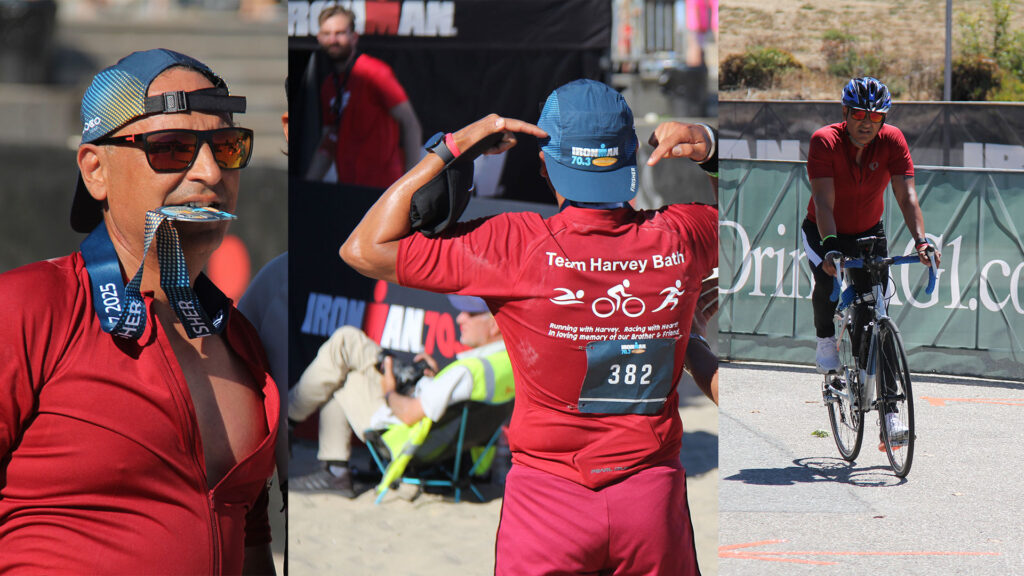
The Power of Adaptability Every Startup Founder Should Embrace + Why I Ran Ironman 70.3 to Prove It
In the early stages of building something meaningful — a company, a brand, a vision — fear shows up before funding does. That’s not a glitch. It’s a signal.
The fear of failure, of being judged, of pivoting, or worse — of stalling — can feel suffocating. But I’ve learned something through late nights building tech, leading construction teams through chaos, and most recently, running Ironman 70.3 Santa Cruz:
Fear isn’t a barrier — it’s raw energy waiting to be repurposed.
That’s the startup founder’s secret weapon. You just have to learn how to burn it clean.
The Power of Adaptability Every Startup Founder Should Embrace
In aviation, you learn this early: no flight ever goes exactly as planned. Weather shifts. Airspace changes. You adapt — or you crash.
Same applies to founding. From rolling out physical cafés to scaling a points ecosystem to launching wellness drinks and apps — I’ve had to navigate unpredictability across verticals. But one lesson keeps repeating:
Rigid vision. Flexible methods.
That’s the winning formula.
Startup founders who succeed don’t just “build fast.” They:
– Change plans without losing purpose.
– Adjust without apologizing.
– Improvise without compromising values.
Adaptability isn’t just survival. It’s strategy.
Why Ironman Was More Than a Race
Ironman 70.3 Santa Cruz was never just about crossing the finish line. It was about proving to myself that I could train my mind, body, and habits to obey the mission — no matter the weather, mood, or chaos of life.
Every training session at 5am. Every weekend sacrifice. Every mile that felt like 10. That was startup bootcamp in disguise.
It taught me:
– Discipline over dopamine
– Consistency over chaos
– Process over panic
I didn’t just finish the race. I rewired how I lead.
Beyond Numbers: The Real Metrics of Leadership
Yes, I care about ROI, LTV, CAC. But I care more about ROC — Return on Character.
Because your team doesn’t follow your spreadsheets. They follow your stamina.
– Will you keep going when things break?
– Will you sacrifice when nobody’s watching?
– Will you lead with purpose, not ego?
These aren’t fluffy traits. They’re what scale companies past the first wave.
Building bR2z wasn’t just about cafeteria apps or loyalty points. It’s about creating systems that serve real lives — and showing up when it matters most.
Final Thoughts: Brand, Business & Becoming
Whether you’re on mile 5 of a run or year 5 of your startup, pain is part of the process. But how you respond to it defines what you build.
– Fear? That’s fuel.
– Failure? That’s tuition.
– Fatigue? That’s just another checkpoint.
So what are you really building — a product? A company? Or a version of yourself that doesn’t flinch when things get hard?
I ran Ironman because I wanted the proof that I don’t quit. Now, I build with the same mindset — because real brands are born out of resilience.